Menu Close

Month: March 2026

Rags to Riches to Gay

It was Annie, if there were five Annies (six in the premiere). It was Glee, in the 60s. It was Rags to Riches, and it ran on NBC for two glorious seasons in the late 80s. Every Sunday night, you’d find me and my brother and sister glued to the TV watching – and recording it on VHS to watch the episodes over and over again. A Beverly Hills millionaire named Nick Foley adopts a handful of orphan girls to rehabilitate his image, and they sing… about everything… all the time.

But Rob, you might be asking, its all girls. How did this make you gay? Was it simply because of the presence of the iconic Tisha Campbell of Little Shop of Horrors fame? You’d think so, but no. For me, it was the beautiful blonde Diane, played perfectly by Bridget Michele. Every gay boy finds a diva to fall in love with and for me, it was her. She was, simply, stunning, and absolutely heart-wrenching for ten-year-old me as I watched her quest for love and get her heart broken.

That resonated. At the time, my heart was being broken nearly daily. I was only ten, eleven, twelve, but I had already mastered the dramatics of the adolescent gay. Ironically, or perhaps just not-so-coincidentally, the girl in charge of breaking my heart consistently at the time was also a sparkling blonde (shout out to Cori!).

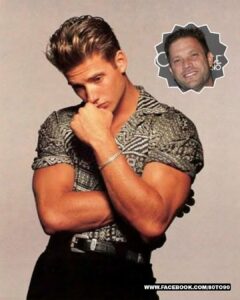
Diane Foley collected many a man in the short run of the show, including the handsome lifeguard Sean played by Ken Olandt, and the Duke, played by Sasha Mitchell shown below, long before his time on Step by Step or the spousal abuse that followed.

I’m a sucker for a handsome face, as much now as I apparently was in the fall of 1987, but even still, I’m not sure it was Diane’s teenager in love that pushed me towards the closet door. Sure, my fascination with her bevy of beautiful beaus definitely should have been an inkling that I was not like other boys. But I think the part of Rags to Riches that really made me a big old gay was the musical numbers. These weren’t Broadway ballads like tomorrow. These were huge pop hits of the 50s and 60s, often with lyrics changed to suit the plot. They were catchy and costumed and choreographed.

Angst? Check. Drama? Check. Hot men? Double check. Add on show-stopping performances, and this show was a recipe for delight for a small prairies gay boy like me.

Do you remember this show? What media made you gay? Do you understand why Diane’s fashion was giving 80s realness in a show set in 1963? Chime in, in the comments.
Iron in his Thighs, indeed

No one is groomed into being gay… but there’s definitely some media moments that can nudge a gay kid out of the closet. This new series deep dives into a few of those for me.

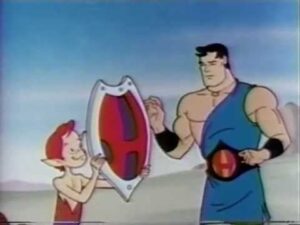
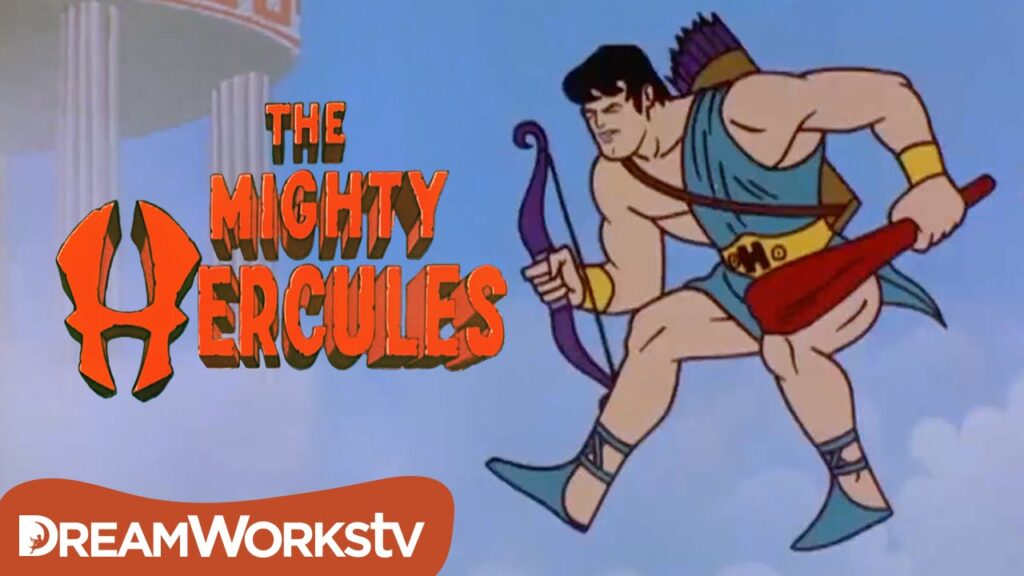
The Mighty Hercules was an animated kids show from the early 60s that ran for 128 episodes. Each episode was only a few minutes, and I think they got tacked on to the end of other kids’ shows in the 80s as an extra mini-adventure. I can almost see myself sitting there cross-legged, dangerously close to a TV with rabbit ears, bowl of Fruit Loops in my lap, entranced by the mythological adaptation before me.

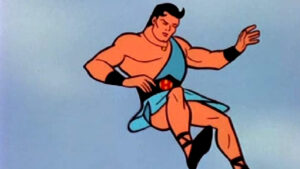
Well, by that and by Herc’s physique. This has to have been my earliest encounter with “the gay gaze”. Years later, in Florence, I stood there looking at Michaelangelo’s David the same way younger me sat there gazing up at this man, descending from Olympus, the wind blowing up his tunic to reveal not only those massive thighs, but just a hint more side butt than was probably appropriate.

It could have been the stories that kept me watching, because I loved Greek myths even before I borrowed D’aulaires Greek Myths from my school library and kept it for weeks, until the librarian actively hunted me down to get me to return it. No, I suspect there was another reason that had me gazing up at my screen like Newton gazing up at his demigod friend.

Hercules? More like Hunkules.

There was a strength and a masculinity there that resonated inside me. It was something missing from the 90s Disney version. It was the first time I probably began to grapple with the issue common to so many gay boys: is this something I yearn to be, or just someone I yearn to be with? And even now, many many moons later, that’s a question I sometimes grapple with. I know who I am now, and am mostly comfortable in my own skin, but a muscular thigh and a well-formed pectoral? I’m glad (I’m glad) to have (to have) a friend like that

Did you watch this show? Did your heart flutter like Hercules’ tunic? Chime in, in the comments.

Post-Mortem Dance Floor

I don’t know what happens when we die. Likely, nothing. That’s cold though, and no consolation as the body count builds. More and more these days, I find too many conversations centered around the inevitability of death, around the privilege of growing older (a privilege denied to too many), and around the grief that collects like water behind a dam.

And I find myself needing to hold onto something else.

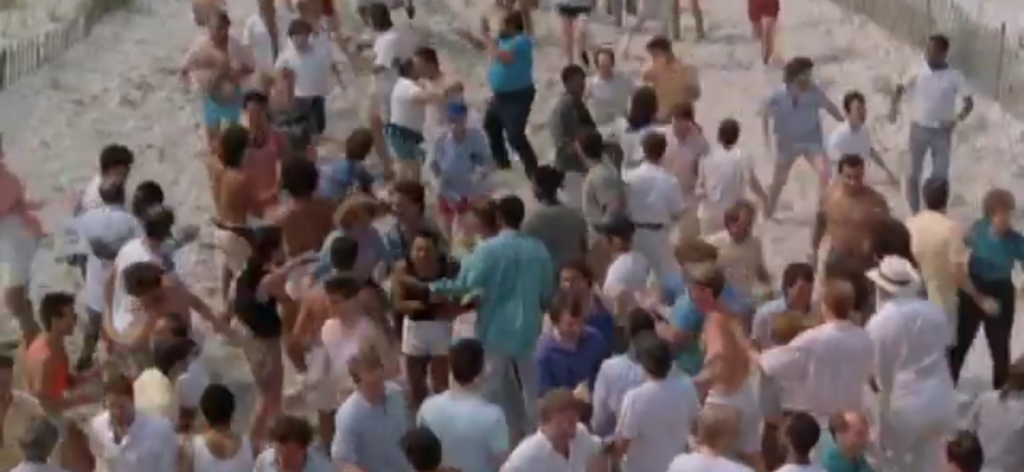
There was a 1990 movie called Longtime Companion, about a group of friends in the 80s and the onset of the AIDS epidemic. The beautiful ensemble cast gets whittled down as the virus ravages their friend group. The beaches of Fire Island feel very different as people keep disappearing. The film ends with them wondering what it will be like when they finally find a cure, and to the sound of “Post-Mortem Bar”, suddenly the beach fills up again, with all those they’ve lost, alive again, healthy again, young and beautiful and filled with joy again.


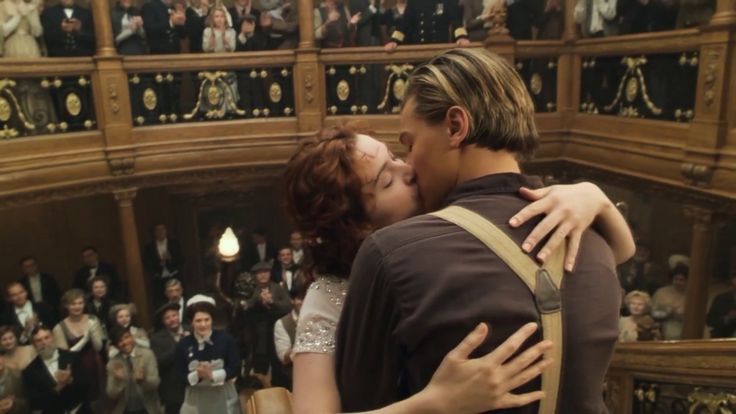
It’s an ending we have seen in other places. Think Rose dropping the heart of the ocean into the water before dying, and she’s back on board the Titanic, and they’re all there waiting for her, Jack at the clock, hand outstretched. Or Sam and Dean reuniting on the bridge at the end of Supernatural. These moments in media are powerful because they represent what we all need – reconnection.

It’s not enough for our lives to flash before our eyes before we go, whether that’s a slow-motion fall through memories or a rapid-fire sensory overload of every thing we’ve ever done. No, what we need is the sense that when it’s time to leave, we will find ourselves again with all of those we’ve lost.

I can see it now. It’s a crowded dance floor at Insert Gay Bar here. The song that is playing is That One, the one we all know, the one we can all sing every word to, the one that cannot play without a smile lighting up every face in the room. And every face is there. Every face we’ve ever known. Every face we’ve ever kissed. Every face we’ve ever loved.

There is no pain. No jealousy. No drama. The people that betrayed us? Those betrayals are healed. The people we betrayed? We are forgiven. The people we failed, the ones who failed us? Here, on this final dance floor, there is no past anchoring us in place. Here, we fly. Here, we are free. Here is only the love that lifted us out of the darkest times, the love we shouted from the rooftops, the love we whispered in the shadows, the love we never dared to speak. Here, it is all loud. Here, it is all felt.

We are washed away of all the grief. We are washed clean of all the anger. We are washed free of all the hurt. We are all golden. We are glowing. And we are all together again. There, in a frozen dance floor moment when the disco ball is spinning, the colors are vibrant, the song is on repeat and we will never tire of it.  The lights are bright and its bloody brilliant and beautiful and it’s ours. Together. Forever. Again.

Close your eyes. See it with me now. This future moment, that’s maybe not so futuristic after all. It could be tomorrow. We are all here on borrowed time. Things change in a flash. But see that flash! Hear the bass. You can’t not sway. And your hands are in the air, and you’re surrounded by the purest. Close your eyes.

See you on the dance floor.