Menu Close

Category: My Gay History

The Legend of the Pride Pity Fuck

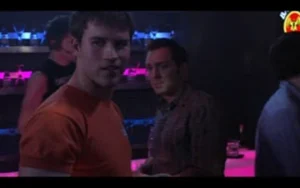
At the turn of the millennium, queer folk everywhere tuned in weekly to watch Queer as Folk. In Season Two, the character Ted, maybe a little older, a little shyer, a little less gym-my than the rest, has a Pride to remember when an absolute god of a man picks him up from Babylon and takes him home for the fuck of his life. Ted of course is head over heels with excitement (after a night of being heels over head), because men like Troy, played by Lee Rumohr, do not take home men like Ted. Small wonder Ted is smitten and begins to plan a future for the two of them. Poor Ted, though. It turns out Ted is just Troy’s Pride Pity Fuck of 2002. Every year, the character explains, he finds a guy like Ted, a guy he would never normally look at, and gives them a gift: himself.

This wasn’t a new concept for me. One of the first rules I’d been taught by my gay elders at the time, back then in my days as a towel boy at the baths, was: every so often, when you’re young and hot, do a troll, because one day you’ll be a troll and want someone young and hot to do you. This was basically what Troy was doing. 2002 Me got this, especially given the character’s name was Troy; in 2002, they were always a Troy, or a Chad, or a Kyle, these shiny happy gay gods.

Back then, I wasn’t a Troy, that’s for sure. As Arnold says in Torchsong Trilogy, I’ve been young and I’ve been beautiful but never the twain have met. But I was, then, young, at least, and being an older gay man in a world of hard bodies and youthful stamina was a concept still unfathomable. Now, 2002 is a long time ago, and young is a word few would use to describe me, without a great big 90s NOT at the end. Troys become Teds, thats the inevitability of aging.

Now, on Queer As Folk, a few seasons later, Ted got his revenge on Troy, when the tables got turned, and Troy didn’t recognize him, and took him home, and it was Ted’s turn to break the heart. The irony there was that Troy had developed real feelings, a pure karmic comeuppance for a character written for us to hate, even as we yearned. (Yearning, I was recently told, is my gayest characteristic, and it’s defintiely true. I’ve been a yearner from the earliest days, when the focal point of that yearning was a girl with the golden curls named Cori; Cory, of course, is also one of those shiny happy names of 2002, which goes to prove Shakespeare’s what’s in a name?)

What prompted this early morning blog? Was it simply the Facebook memory reminder that on this day in 2022, an early morning Grindr message was brought to me by the miracle of Pride? I don’t remember who it was from, but clearly someone hot, someone, as we used to say, “out of my league.” Pride brings out the horniness, but it also brings out the loneliness. We are all looking for connection, even if its ephemeral and superficial; I’ve had intensely intimate connections that only lasted until sunrise.

In the meantime, whatever the shiny happy names of 2026 are, it’s Pride and I’m not too proud to not be available for your Pride Pity Fuck of the season.
Right-Click to Forever

I talk a lot about my GAY history, but one thing I don’t often write about is my GUY history.

Today, I found out someone I used to see every week passed away last month. Motivated to find a certain picture of him from “back in the day”, I deep dove into a folder that I think many of us have, even though most probably wouldn’t own up to it. Even as I type that, I’m not sure I’ll ever hit PUBLISH on this one.

Because you see, there’s a folder that I’ve copied from one computer to another for years before sticking it in an online photo storage service and letting it collect cyber dust. In that photo, there’s a collection of boys I thought were beautiful, right-clicked and saved off gay.com or Nexopia or dudesnude, back in the days before there were thousands of pictures of everyone all over everywhere. In these pics, they’re still beautiful, because that’s what a picture does: freeze frame captures of a simpler time.

Maybe it’s creepy, this folder, but they’re postcards from my past. Keepsakes of the boys I crushed on, the boys that crushed me. The Ice Princess, the Lifeguard, the shiny happy twins. A gay.dom date that was great. A gay.com that wasn’t. The flight attendant from Toronto. The straight bartender from Play. The other straight bartender from Play. The ex-boyfriend of my ex-boyfriend, pictured with his now ex-boyfriend. The models from my magazine. The Buddys VIP card pics of a few boys I thought were just the MOST beautiful. It’s mostly faces. Well. And butts. A lot of butts. But mostly, a collection of faces lost in time, before the ravages of age and alcoholism and meth and failing health.

But there, in that folder, they’re still young and beautiful. Always young and always beautiful. They’re low-res and grainy and too many have the Nexopia logo in the bottom corner. I can look at the folder, and I’m teleported back to a time before life lifed them the way life always does. I probably did tell them all that I thought they were beautiful, but never enough. Especially for the ones I can never say it to again.

Take a thousand pictures. Tell people you think they’re beautiful.

And if you have a folder that you stored a younger me in, thank you for seeing something I never saw.

Edmonton Pride Parade Returns

When I came up to Calgary from Lethbridge in June ’97 for my first parade, well, let’s just say I wish I remembered more. The vodka was freely flowing the night before at Boystown, and a boy with icy blue eyes kept me up late, and the parade is a blur. I do know that my intended spectator-only status was derailed when said boy with blue eyes beckoned me from the group he was marching with and suddenly I found myself in a parade.

That wouldn’t be the last time.

In fact, by 2003, I was part of the group planning the parade, in a year that got derailed by the vilest transphobia, in a year that half the board up and quit within three months of the parade, in a year that sent myself scrambling to keep everything on track while emergency recruits like Mickey and Arron and Murray kept the society sound – and got us a much-overdue proclamation from then Mayor Smith.

My last time in a parade was 2014, when EVO was celebrating its first Edmonton pride. Then, the parade was downtown, right on 102 Avenue at the bar, and our circus float cheered so loudly as we rolled by the bar we were still just newly calling home. Torrential rain followed.

The parade then moved across the river and for a few reasons, we opted out of participating, although I was super honored to be asked to help judge the entries one year. Edmonton’s parade in 2019 was cancelled and while I do suspect it would have come back the next year, 2020 had different plans for Edmonton and the world.

Here we are five years past that now, and the new group running Pride Fest has taken the important first steps to bring back the parade. I sat down with Michael Phair and CTV a few weeks back to talk about the history of our parade and what the return means. Making this post mostly just as a way to share that link, because, you know, Meta gonna Meta

Read it here and read more about the history of Edmonton Pride here

Why.

Twice last week I was asked, “why do you do it, EVO, gay bars, why?” This was after conversations about the changing nature of gay nightlife, the ongoing and eternal combination of construction and crime, the $20,000 in vandalism the new space has been hit with in just four months, and all the other headaches of owning a business that aren’t unique to gay bars and that any other business owner can understand.

Jokingly I replied, well, it’s not for the money, that’s for sure. The days are gone when a gay club was a license to print money. Those days left when the rest of the world began to accept gay people safely into their spaces, and the need for gay bars began to get watered down. Half-jokingly, I also replied, what else would I do, fifty is too late to start over.

My standard, more serious answer though is that yes, there’s lots of problems and stress and it can very much feel like pushing a boulder up a hill without ever reaching the top, but when it works, it works. There are nights when the vibes are right, when the crowd is right, when the music is right, and when the problems that usually happen just for whatever reason don’t, and you’re standing in the DJ booth and looking out at a sea of people, and they’re glowing. The space is glowing. It is a golden moment that any nightlife entrepreneur knows.

Gay bars just aren’t any nightlife though, I will add, whenever I am asked that question. Pop up events may be dominating the scene in many cities, but for a visiting queer, they don’t know what straight bar on what night is safe for them to cruise and connect. They need the gay space. For someone just coming out, who’s always felt different, who’s never been in a space where they’re the majority, they need the gay space.

That’s all true, and that’s why it’s still #yourgaybar even though it might make more sense to just be a community pub, with less potential gay stigma. That’s why the pride flag is still in a window, even though that window keeps getting smashed. Because the cost of replacing that window is still less than the cost of changing what and who we are.

But, those answers, while true, aren’t necessarily the truth of why *I* do it. My journey into gay nightlife began 26+ years ago when I moved back to Edmonton from Lethbridge and sought a gay job, any gay job, as a means to re-create the connection and community I had found in Lethbridge. But even that isn’t “truth.” No, the truth goes back a lot further.

Picture it. Fort Saskatchewan (population 12, 500, circa mid 80s). Whatever popular was, I was the opposite. I was an overachieving teacher’s pet, with really only one good friend, and I spent most Monday mornings listening to everyone talk about their wild and wonderful weekends, parties I wasn’t part of. I was awkward as fuck, and probably only partly because I was deeply in a closet that I didn’t even have language to define. I was desperate to fit in, to be the life of the party.

Zoom ahead 20 years, skipping past some Roost dancefloor moments that reinforced the awkwardness of that kid (Jazzy, play Cyndi Lauper ‘You Don’t Know Where You Belong’). The year is 2005. I have carved out a niche for myself in Edmonton nightlife, even though my recent attempt at a monthly magazine has failed, as has my marriage. I am managing Buddys at its absolute height, as the Roost starts its descent from its decade and more dominating Edmonton gay nightlife. All the friends of my first few years have essentially deserted me, because they’re loyal to their bars, and Buddys is not theirs. No, in 2005, Buddys is, very much, mine. From sailor parties to Stardust Lounges, through an endless parade of twinks competing in an endless variety of amateur nakedness. I’ve got a hot boyfriend, and I’ve got a hot job, and I realize this is what that long forgotten kid wanted. I’m the host of the party everyone wants to be at. When all these people start their Monday mornings, they’re telling tales of their weekend shenanigans at the parties I was throwing.

It didn’t last, of course. In the end, very little lasts. But the moments of gold stay gold, even two decades later. You might think you know the answer now, to the question that started this Wednesday ramble. For 2005, read 2025, and for Buddys, read EVO, and of course it seems obvious: hosting the party everyone wants to be at. And that’s not… untrue… but the deeper truth is: I hold on, in 2025, to that moment in 2005, because it’s still 1985 and I just want everyone to be at my party.

So maybe EVO needs me because I’m the face of it all, but I need it, too. Maybe I do do a balance sheet every party where I add up the people there and subtract the people who chose not to be as if the sum I eventually reach has something to do with my inherent worth as a person, but I also know that there’s hundreds of people who will still spend a Monday morning reviewing their weekend, or their life of weekends, and I’ll be there, maybe in the background, maybe in the shadow, but part of their life. And even if I’m not front and center in their moments of gold, maybe I helped make those moments happen for them.

And that’s a legacy to be proud of.

Grief at the Gay Bar

We were at the gay bar when we got the call. “Does anyone know where he is?” No one did. He wasn’t there. But it made sense they could call there for him. He was one of us. It was logical, even likely, that he’d be there, or at least, that someone there would know where he was. A search began, one that ended in tragedy. We were at the gay bar when we got that call too. They knew where he was, now. Or at least, they’d found the body.


They are places for joy, freedom, liberation, celebration, but for many, they are also a place for grieving. A community that comes together regularly at the same watering hole finds family there, and when that family suffers loss, it’s around that watering hole they gather, to share the stories and the tears, to ask the questions, sometimes to find the answers.

I wonder what it was, my first encounter with grief at the gay bar. It certainly couldn’t have been that 2017 night, when Lonny went missing and then was found, and that means it certainly wasn’t that 2018 night, exactly a year later, when we were gathered at the gay bar to remember Lonny, and a phone rang again, with another loss, another set of answer-less questions. And it wasn’t that night in 2014 when the rumors ran rampant through the community about a murder. Nor was it all those nights in 2009 and 2010 when we watched another death slowly happen, a boisterous laugh slowly descending into sickness. Nor even years earlier, in the same bar with the same man, when we got a call, but there was work to do, then shooters to drink, and then and only then, obituaries to write, never even thinking that there would be a night when I’d be sitting there furiously scribbling an obituary for him.

I suspect for me, the first time I linked a gay bar to grief, it was external grief. It was to the gay bar I ran, drunk and overwhelmed with emotions following my cousin’s funeral. Already way back then, in 2002, it was the gay bar family I needed to cope with loss in my “other” family. As that gay bar family grew and grew, so too did the body count.

I’m too young to have lived through a time when gay bars equalled grief in a very different way. I was standing outside where Flashback was the other day, guiding a group on a queer history tour. “Why did Flashback close,” someone asked, and I thought about the recently-released documentary on Edmonton’s “54 of the Prairie” and talked about how much more eloquent it was than I could ever be in explaining the impact of coming to the dance floor every week only to see another empty bar stool, another empty go go box, where the body that used to be there every week, was gone. AIDS reached in with a cold claw and ripped the heart out of so many gay bars.

I wonder what it was like for the staff then. I know the burden of being staff in a gay bar during one of those spontaneous gatherings born by grief. You want to grieve too, but you cannot. You have cocktails to serve, and the people there want your ear, to share their pain; pain shared is often pain lessened. It is only later, when those crowds go home, that you have the chance to share your own pain, with co-workers or close friends. With gay bar family. And maybe, you’re alone at the end of that night, and all that pain can break free from you in a howl that echoes off a wall, like its the latest bass drop from the DJ that was there just before.

Then, as now, as always, the show must go on. There are people gloriously unaffected or unaware by the communal grief so many others are sharing. They have their own lives, their own questions, their own griefs, and they might be there just to drink and dance, no interest in the personal pain their bartender might be feeling. We learned that again in 2014, when the call came that a grandfather who had been failing had finally fallen; but there was literally a show happening, and people needed drinks, and the show needed tech, and it was busy and rent had to be paid, and grief could wait. Grief is patient that way; it can always wait. It will sneak up on you and remind you it’s there when you least expect it. Maybe there’s a note in the latest pop diva hit that pings the part of your brain that heard that same note in some long ago hymn, and suddenly, you remember. Oz is great, but Kansas is always there. The technicolor ends.

Last Call always comes.

And when it does, I hope there’s a space you can go, with people who can share your pain because they shared your love. In the end, isn’t that what it is? Grief is just love. The final outpouring of love that never ends. Love isn’t buried with the body; love isn’t interred with the ashes. The love that was there in the happy hours remains long after Last Call is called. It’s the shooter you pour out and leave sitting at a chair now empty. It’s the sea of Superman shirts on a Sunday afternoon. It’s the guy who comes down to see you when his brother dies because he needs someone and he knows you’ll be there, at the gay bar. It’s the pool tournament in memory of. It’s her crown on display; it’s his picture in spotlight. It’s a spray of tattoo’ed stars for the too many too soon lost to addiction and suicide.

Of course there will be grief in gay bars, because there’s connection and community and love in gay bars. And that’s what I remember.

To Vicky (August 5, 2007), LJ (August 5, 2017), Tina (August 5, 2018)…
To Josh and Josh and Darcy and Ben, to Ashley and Chris and Paul and Sam, to Steve and Dickie and Chris and Gunnar and Bella and Dylan and Brennan and Coco and Matt and Alvaro and Dominic and Sue and Brent and Ryan and Jude, to Ralph and Chuck and Kevin and Kylie and Brandi and Eldin and Pam and Lane and Michelle and Tina and Lori and James and Conrad and Dow and Deb and Jim… and all the other amazing people with numbers on both sides of their dash

My Big Gay Nightlife Silver Jubilee: The Georgia

Today marks the 25th anniversary of my career in Edmonton gay nightlife beginning. Twenty-five years! They passed in a blink really. Then, I was fresh out of university in Lethbridge, just freshly moved back to the area, and all I wanted was a gay job. Connection and community, those were what I needed to find, moreso than a career. The Edmonton Rainbow Business Association’s Pride Pages listed all the local gay businesses, and I dropped off resumes. The Georgia Baths was the first to reply with an offer.

You can learn more about the Georgia Baths here, in a piece partly written by me for the Edmonton Queer History Project. In brief, it had been a gay bathhouse for years, but mostly under the radar. That enabled it to survive through the Pisces Spa raid, the aftermath of which saw another baths close its doors. The Georgia also survived through the height of the AIDS crisis, which saw so many bathhouses coast to coast close down. The Georgia hadn’t promoted itself as gay space until the late 90s, after the much-publicized opening of Down Under. Then, to compete, new Georgia owners Richard and Terry started to advertise, including in those Pride pages, where I found them.

I’d never been to the Georgia as a customer. I’d been to Down Under, and definitely would have preferred a job there, but the Georgia was the one that offered, and I needed income. After all, I had a Bachelor’s Degree to pay for, and definitely wanted to get out of my parents’ basement. My parents thought I was working in a coffee house; rolling towels wasn’t exactly what I’d gone to school for. Connection. I was seeking connection. But these weren’t the people I wanted to connect with.

The ironic thing is, the “smattering of trolls and 70s porn rejects” I wrote about in that journal entry? They were likely the age I am now.

If the past twenty-five years of my gay nightlife journey are just a blink, my time at the Georgia is only the teeniest part of that. Days after starting there, I got the awaited interview at Down Under, and things changed. But the Georgia was the first step on a path I hadn’t ever intended on walking. I may not yet know the final destination, but let me tell you, the journey has been beautiful. Over the next weeks and months, I look forward to looking back on some of that journey. And you’re welcome to come along.

My Life Among the Lesbians

Just finished an interview with Taproot Edmonton about the history of lesbian space here in Edmonton and it has me musing about my own lesbian history, especially with regards to my time in gay bars here (2024 marks my silver jubilee of Edmonton gay nightlife so the musings are gonna muse for sure!)
I never went to Club 70, Edmonton’s first gay bar. It’s very much before my time. It was a space for men and women both, but I don’t know that that was because of desire as much as necessity. The story goes, lesbians came early, filled the jukebox full of quarters for their country tunes, and by the time the gay men were done primping and preening and ready for something poppier, that juke box was booked solid, and so, Flashback was born.
My own gay history begins somewhat similar though. Like Edmonton in the days of Club 70, Lethbridge in the late 90s didn’t have a large enough out community to sustain gendered spaces or events. No, instead we all gathered together in a hall once a month for dances aka Homohops, and maybe just maybe, that’s my taste of what Club 70 was like: everyone dancing together, man with man, woman with woman, as God intended. (In 2024, this paragraph feels exceptionally binary.)

Monthly hall dances were a thing in Edmonton too. Womonspace started in 1982, and they were all about those hall parties right from the beginning. Small wonder. After Club 70 closed and became the short-lived lesbian-owned Cha Cha Palace, it became Boots n Saddle, and they were pretty public about not wanting lesbians there. Other bars at the time, like The Roost and Flashback, had up-and-down relationships with the lesbian community, often tossing them a Wednesday or Thursday for a women’s night. Womonspace ran events at places like Steppin’ Out and Option Room over the 80s and 90s, but they remained the go-to source for all things socially Sapphic.

By the time I moved back from Lethbridge and started my journey into Edmonton gay nightlife, Edmonton had its very own brick-and-mortar lesbian space, right out the alley door from Boots. Secrets was where we went for Wings and Bingo, early in the night before heading over to the Roost (this was back in the day when you went to bars to hook up, yes kids, pre-apps!) Secrets, under the ownership of Liz Gates, wasn’t Edmonton’s first lesbian bar, but it was certainly iconic. And like all Edmonton gay bars, yes, Twiggy worked there. (If you want to know some of the shenanigans that happened up and down the alley between Boots and Secrets, catch an Edmonton Queer History Project walking tour this summer!) Liz was very passionate about community-building; yes, the space was proudly lesbian, but never exclusive, and Liz tried to work with other bars in the city whenever she could. Even though this was also the time when one nightclub, on opening, was free for men but charged women a cover charge. (That was a short-lived move, for sure, but even years later, when managing that bar, I couldn’t get a woman bartender hired. Coat check was the best we could manage for her!)

But really, for the 2000s, my life was a gay boy among gay boys. That changed forever in 2010, when Boots abruptly shut down, and I got a phone call from Tracey and Deborah at Prism (Liz sold Secrets in 2003, it got re-branded and then re-located, and then sold to T&D in 2008). Working at Prism expanded the zoo of my life; no longer was it just chicken and bears, now, there were cougars too. And that whole assortment of folks soon relocated to Junction, in the former Boots space, a full circle moment for my life and for our community.

My life changed so much at Junction. Where past owners had enabled and abetted my drinking and drug use, Deb and Tracey gave me the tough life I needed to get sober. And sure, that sobriety came only after one Sunday Funday with the foogers (cougar + f*g) led to some poor making out choices, but it really did redirect my life. Sobriety didn’t always stop me from being a dick sadly, which didn’t always go over well with folks living their best dick-free lives, but I had my girlfriend, and my girlfriend’s girlfriend, and a dozen other strong and proud and beautiful women, and truly, those Junction days were underappreciated. Even Carla and her goddam hot chocolates.

When Junction closed and then a year later, EVO opened, the space we had wasn’t the space they wanted. Junction had been pub and eatery more than dance club, and EVO skewed young (and younger and younger all the time it feels). EVO did start things off working with Womonspace on a few events, but Womonspace was already starting to fizzle out by 2013 (but thirty years is an amazing run for a queer non profit volunteer driven social group)

With EVO, we have always tried to have events that were mostly all-gendered. That’s been a learning curve, for sure. Just even think of how much language around gender has evolved since 2013 though; we haven’t been the only ones learning! We had a short-lived series of Goddess parties, mostly with A-DJ in the booth, trying to give Edmonton’s women-loving-women folks a night more about them. In the greater community itself, lesbian-owned spaces like Mama’s and Pink Noiz came and went, and groups like Sapphic Speakeasy and ELEN came into being. We’ve loved working with ELEN the last couple years, and they really are carrying that Womonspace torch, especially in a city where so many pop-up events have been clearly male-focused. And shows like Sapphic Panic, plus 50% Sapphic DJs, keep the space lesbifriendly.

My own personal journey though, that’s a different story. My days behind the bar cracking Coors Lite for cougars are long done. I couldn’t even tell you the last time I had to decorate a Moosehead with a glowstick. That bartender interaction in a pub space let me build relationships with customers that doesn’t happen the same way now in the dark and booming space of a dance club. But when we lost Tina in 2018 or Deb in 2023, I got to see those people who worked their way into my life and my little gay boy heart.

And sure, there’s part of me that loves looking out on a dance floor of shirtless and sweaty gay male torsos, but mostly, I am happiest when I look around the club and see that it’s filled with all genders and races and ages, because that’s what our community is about, and that’s what I’ve always been about creating.

First Dance at the Discotheque for Deviants

The Croatian Center was far from central Lethbridge, but that was where they held them – these monthly gay dances. There were no gay bars, of course, not there in mid-90s southern Alberta where fundamentalist Christianity butted heads against Mormonism and neither wanted anything to do with gays. I was terrified, hopeful, so many things. But it needed to happen.

Was it really only a couple weeks since hot Troy from Psych class had been going off so publicly about how anyone that thinks homosexuals are freaks can kiss his ass? Just that had changed everything. Was he gay? Was he out? It seemed that way, and the only way to know for sure was to re-exit my closet.

Had I thought about what a gay bar would look or feel like? Maybe, maybe not. But there was no way I would have pictured this room, just a big square, tables along each side, open in the middle for dancing, streamers and balloons hung like it was a dance in junior high. And just like in junior high, I sat there, a part apart.

But there were women dancing with women, and men dancing with men, and I’d never seen any of that in junior high gymnasium dances, that’s for sure. Mostly the music was fast, and people were dancing, one big gay crowd, but occasionally, they’d drop something slower, and people would couple off, slowly spinning around, again like in junior high, but without some teacher chaperone making sure they were a balloon width apart.

WANT. That must have been the feeling I felt the most. But I wouldn’t act, couldn’t act. Oh no, there people, that world, they were foreign to me, and even just being there was a big enough deal. Besides, Troy wasn’t there, and he’d been the goal.

The night was winding down, and I was probably starting to feel the vodka slimes I’m sure I was drinking, likely ready to figure out how to get a cab way out there in the country and just call it a night when he came up to me. I can practically still see him, silhouetted against the dance floor lights, as he asked if I wanted to dance.

There I was, slow dancing with a boy, and I’m sure I was nervous AF. There’d been slow dances before, with girls, in junior high gymnasiums, but this, this was different. Hands felt different. Intent felt different. This was heavier, harder, more meaningful, more real.

I left that Croatian Hall with that boy that night, to a house party, where we found our way into a dark downstairs bedroom, but that’s a story for another time. This story is just that dance. Only you and me, we were young and wild and free.

Edmonton Queer History Links and Resources

I’ve always enjoyed learning about those who came before me, ever since I went to the book launch for Darrin Hagen’s The Edmonton Queen. The last few years, this interest has turned into a vocation, and for those of you who also want to dive into our collective queer history, here are some great places to turn!

One main site is the Edmonton Queer History Project. This includes an online map featuring downtown walking tours, which you can do on your own or in groups (click here for groups dates!) The site also contains links to two podcasts: From Here to Queer and Vriend Versus Alberta. The newest addition to EQHP is a stories map where you can drop pins to memorialize the places that figured in your own queer history.

If you want to tell longer stories, check out the Rainbow Story Hub! This foundation exists to capture history from the experiences of the people who lived it, so that future generations can find comfort, inspiration, and queer joy from those that came before.

The Edmonton City as Museum Project also has loads of articles on our queer history: a five-article series on gay bars, a five-articles series on the Pisces Spa raid, a two-parter on the ISCWR, and more.

There is also an amazing and growing collection of digitized materials accessible through the Internet Archive, thanks to EQHP and their partners who have been working to collect and scan these great resources. With over 70 GB of stuff, your dive can be deep indeed!

You can also check out Tales of the LGBTQ, a podcast whose early focus was on the people who enriched our community.

And of course, if you want to start your journey like I did, check out Darrin’s book, The Edmonton Queen, available on Amazon here among other places.

The Stardust Lounge: A Gay Bar Moment

For most of my gay life, the Sunday Night drag show was a gay bar staple. Whether it was Feather Boa at the Odyssey in Vancouver, where I saw my first ever performances, or the Sunday shows at Boystown or Detours in Calgary, or Edmonton’s Betty Ford Hangover Clinic at The Roost, the weekend ended with drag.

In the spring of 2005, Twiggy and Kitten Kaboodle had been dominating Edmonton drag for years. Every Sunday, the area around the stage would be filled with people screaming for Kitten to do Tina, or for Twiggy to do a signature number like Lucy in the Sky with Diamonds or These Boots Are Made For Walking (Fun fact, Twiggy, wanting to avoid doing Boots, got rid of her boots entirely, but that just forced the audience to start wearing boots so she could borrow them when they demanded it as an encore). I was among that crowd for the longest time, but that spring, I was managing Buddys, direct competition to The Roost, and Sunday Night was the night I wanted. We already had Monday, Thursday, Friday on lock, but couldn’t crack into the Roost’s Saturday or Sunday. Who could I possibly find though, that could remotely compete against the drag juggernauts of Twiggy and Kitten?

Then I saw her, walking down the street in front of Buddys on her way to work at the nearby Rexall Drugs. Binki. I’d worked with Binki before. She’d played Dorothy in our drag production of the Wizard of Oz, and then the Sandy to my Danny in the ISCWR production of Grease. As she walked by, I yelled out, “Hey Binki! Wanna host a drag show?” She laughed, I laughed, and I thought no more about it.

Until a few weeks later when she showed up at the bar, proposal and co-host in tow. The co-host was Vanity Fair, who I knew, but not well. They were both talented, and of the same drag generation as Kitten. That was good. Buddys was the gay bar of the next generation, and our queens and shows needed to represent that. The show they proposed was called The Stardust Lounge. They pictured it as a glamourous night out, candles on the tables around the stage kind of glamour. I got the approval to try it, bi-weekly alternating with the already existing GoDonna Show, and we aimed for a June launch.

Just a couple weeks before the first show, Binki and Vanity got to host a set at Coronation, which was maybe the first time the city got to see the two of them in action together. And every performance they introduced, they managed to remind people that The Stardust Lounge was coming.

It came, and it was glorious. I mean, maybe not the curtains those first shows, but the shows? So glorious. And the reviews spoke for themselves, as did the Peanut Gallery of loyal fans the show soon gathered. The Stardust Lounge rang the death knell of the Twiggy/Kitten Sundays, because Twiggy and Kitten soon wanted to be guests in Binki and Vanity’s new gig, with group numbers every show and a wonderfully fresh hosting dynamic.

The Stardust Lounge ran at Buddys for six months. Then, my brand new addiction derailed their first show of 2006, and they quit, until I got fired, then they went back. But when negotiations with Buddys failed to meet their needs, they moved the show to The Roost. There, they operated as Flashback Sunday for 2007, The Roost’s last year, and then they and their casts, feeling the burnout, changed the show into a long weekend special event at Boots.

Soon though, the show suffered a schism. One spotlight was maybe not big enough for two stars like Binki and Vanity. The show had catapulted them to the top echeleon of Edmonton drag, leading Pride Parades, hosting the main stage at our festivals, but they splintered. Binki and some of her girls relocated to Play, as the Playgirls (which became the EVOgirls and then Les Girls); Vanity stayed on at Boots with a new group of girls, starting shows called the Queen of Hearts Cabaret (which eventually led to this becoming an ISCWR event) featuring the Pleasure Dolls. They reunited occasionally though, some gigs at Junction, and then eventually, a stupendous ten-year reunion tour in 2005 at EVO. But it was never the same.

The success of the show was all them, I know that. I was merely fan and historian and stalker, but when I look back, I can’t help but think that without me yelling out at Binki that spring day, this sequin-clad chapter of Edmonton drag may never have happened. To this day, they’re two of the most talented entertainers, hosts, and artists I’ve ever had the pleasure of working with.